
Electric vs. Gas Heating: Pros and Cons – Your Ultimate Cost & Comfort

In This Guide7 sections+
- What’s the Real Difference? A Quick Look Under the Hood
- The Upfront Cost: Installation & Equipment Breakdown
- The Long Game: Comparing Monthly Operating Costs
- Our Complete Electric vs. Gas Heating: Pros and Cons Guide
- Safety, Maintenance, and Lifespan: A Practical Care Guide
- The Environmental Angle: Sustainable & Eco-Friendly Heating Choices
- Frequently Asked Questions About Electric vs. Gas Heating
That first real chill in the air means one thing: your heating system is about to wake up from its summer slumber. But as you reach for the thermostat, a bigger question might be on your mind, especially if you’re considering a new system: which fuel source will keep my family warm without breaking the bank?
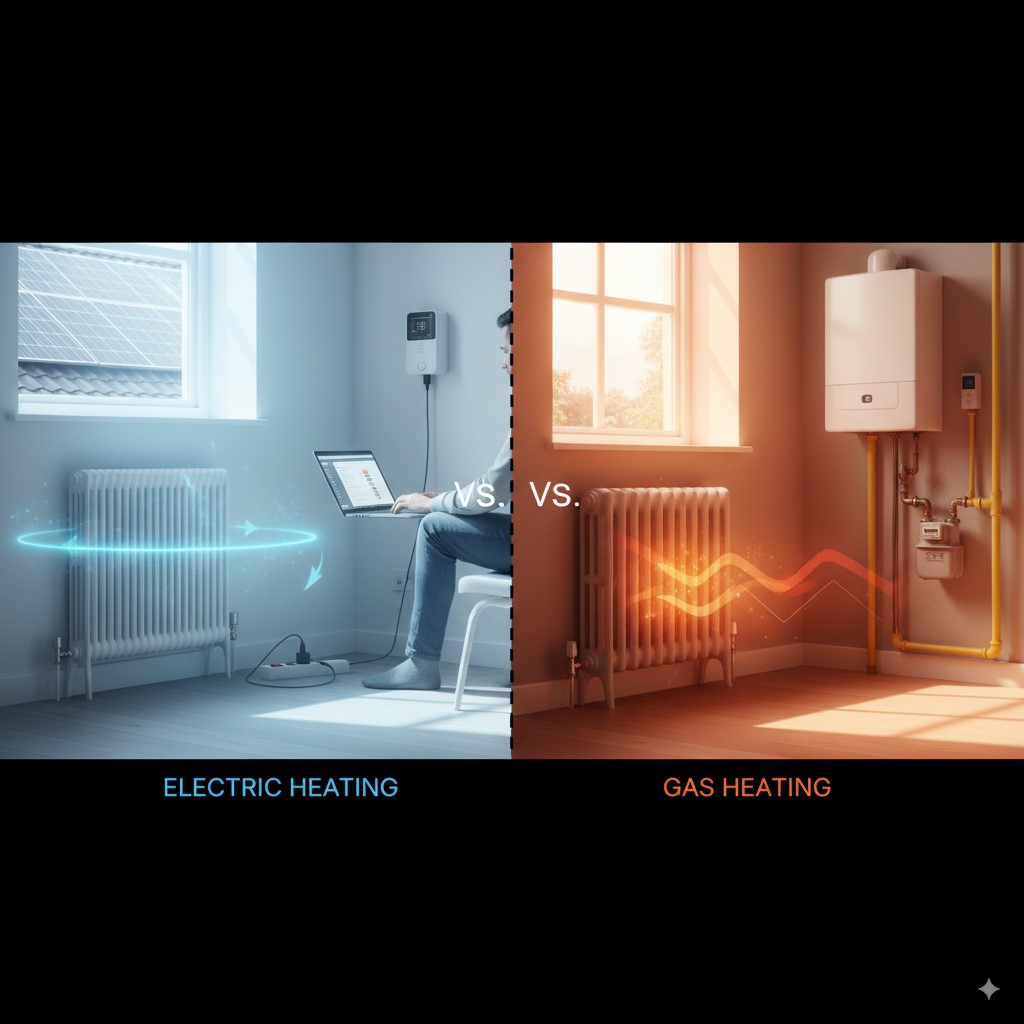
The debate over Electric vs. Gas Heating: Pros and Cons isn’t just a technical decision for HVAC pros—it’s one of the most important choices you’ll make for your home’s comfort and your monthly budget for years to come.
Imagine making that choice with total confidence, knowing you’ve picked the most cost-effective, comfortable, and reliable heating system for your specific home and climate. Picture steady, even warmth in every room and predictable energy bills all winter long.
You’ve come to the right place. As technicians, we help homeowners navigate this decision every day. Let’s walk through this complete guide together, breaking down everything you need to know to make the perfect choice for your family.
What’s the Real Difference? A Quick Look Under the Hood
Before we dive into costs and performance, let’s get a clear picture of how each system actually works. It’s simpler than you might think, and understanding the basics is the first step in our Electric vs. Gas Heating: Pros and Cons guide.
How a Gas Furnace Works
Think of a gas furnace as a controlled fire. It uses a burner to ignite natural gas or propane inside a sealed chamber called a heat exchanger. As the heat exchanger gets incredibly hot, your system’s blower fan pushes cool indoor air across its exterior.
The air soaks up the heat and is then distributed throughout your home via ductwork. The harmful byproducts of combustion, like carbon monoxide, are safely vented outside through a flue pipe. It’s a powerful and direct way to generate heat.
How Electric Heating Works
Electric heating comes in two main flavors, and they are very different from each other:
- Electric Resistance Furnace: This is the most straightforward type. It works like a giant, super-powered toaster. Electricity flows through large heating elements, called coils or strips, causing them to glow red hot. The blower fan pushes air over these hot elements, warming it up and sending it into your home.
- Heat Pump: This is the star of modern electric heating. Instead of creating heat from scratch, a heat pump moves it. In winter, it uses refrigerant to absorb ambient heat from the outside air (yes, even cold air has heat energy!) and transfers it inside. It’s incredibly efficient because moving heat takes far less energy than generating it. In the summer, it just reverses the process to provide air conditioning.
The Upfront Cost: Installation & Equipment Breakdown
Your initial investment is a huge factor. The price tag for a new system includes both the equipment itself and the complexity of the labor involved. Here’s how they stack up.
Gas Furnace Installation Costs
A gas furnace system typically has a higher upfront cost than a basic electric furnace. The equipment itself is more complex, with burners, gas valves, and intricate safety controls.
The installation is also more involved. A certified technician must:
- Run a dedicated gas line to the unit.
- Install a flue pipe (venting) to the outdoors.
- Ensure all connections are perfectly sealed to prevent gas or carbon monoxide leaks.
Because of these requirements, the labor costs are generally higher. The efficiency of the furnace, measured in AFUE (Annual Fuel Utilization Efficiency), also impacts the price—a 96% AFUE furnace will cost more than an 80% AFUE model.
Electric Furnace & Heat Pump Installation Costs
This is where electric systems often have an edge on day one. An electric resistance furnace is usually the cheapest heating system to purchase and install. It doesn’t require venting or gas lines, making the installation process faster and simpler.
A heat pump, on the other hand, has a higher upfront cost, often comparable to or even more than a gas furnace. But remember, a heat pump provides both heating and cooling in one unit. If you also need to replace your air conditioner, a heat pump can be a very cost-effective two-for-one solution.
The Long Game: Comparing Monthly Operating Costs
The purchase price is just the beginning. The real story of affordability is told through your monthly utility bills. This is where your climate and local energy prices play a leading role.
Why Gas Heating Is Often Cheaper to Run
In most parts of the country, natural gas is significantly cheaper per unit of energy than electricity. We measure heat energy in BTUs (British Thermal Units). Historically, buying one BTU of heat from natural gas has cost less than buying that same BTU from electricity.
Even though an electric resistance furnace is nearly 100% efficient (meaning all the electricity it uses becomes heat), the high cost of electricity makes it the most expensive way to heat a home in most scenarios. A high-efficiency gas furnace, which converts over 95% of its fuel to heat, combined with lower fuel costs, typically results in lower monthly bills, especially in regions with long, cold winters.
When Electric Heating Makes Financial Sense
Don’t count electricity out! There are key scenarios where it’s the smarter financial choice. This is where we see the true benefits of Electric vs. Gas Heating: Pros and Cons analysis.
- If You Use a Heat Pump: Modern heat pumps are a game-changer. They are 300% to 400% efficient, meaning they move 3 to 4 units of heat for every 1 unit of electricity consumed. This incredible efficiency can make them cheaper to operate than gas furnaces, especially in moderate climates.
- In Homes Without Gas Lines: If your home isn’t connected to a natural gas main, your alternative for gas heating is propane, which is often much more expensive. In this case, a high-efficiency heat pump is almost always the more economical choice.
- For Homes with Solar Panels: If you generate your own electricity, using it to power a heat pump can slash your heating bills to near zero. This is a cornerstone of creating a sustainable and eco-friendly Electric vs. Gas Heating: Pros and Cons solution.
Our Complete Electric vs. Gas Heating: Pros and Cons Guide
Let’s put it all together. Here’s a head-to-head comparison covering comfort, performance, safety, and lifespan to help you decide.
The Intense, Quick Heat of a Gas Furnace
- Pros: A gas furnace produces very hot air (typically 120-140°F). This allows it to heat up a cold house very quickly. If you live in a place with brutal, below-freezing winters, the powerful output of a gas furnace is hard to beat.
- Cons: The air can sometimes feel dry, requiring a whole-home humidifier for comfort. The powerful on/off cycles can also create more noticeable temperature swings between cycles compared to the more gradual heat of a heat pump.
The Steady, Consistent Warmth of Electric Heating (Heat Pumps)
- Pros: A heat pump delivers a gentler, less intense stream of warm air (usually 90-100°F). While it takes longer to raise the temperature initially, it provides a remarkably consistent and even heat by running for longer, steadier cycles. This eliminates hot and cold spots in the home. They are also typically quieter than gas furnaces.
- Cons: In deep-freeze temperatures (generally below 20-25°F), a heat pump’s efficiency drops, and it may need to rely on supplemental electric resistance heat strips (the “toaster” method) to keep up, which can be expensive. However, modern cold-climate heat pumps are engineered to work efficiently down to 5°F or even lower.
Safety, Maintenance, and Lifespan: A Practical Care Guide
A heating system is a long-term relationship. Understanding the upkeep and potential issues is key. Following this Electric vs. Gas Heating: Pros and Cons care guide will ensure longevity and safety.
Gas Furnace Safety & Maintenance Best Practices
Safety is the top priority with any fuel-burning appliance. The primary risk with a gas furnace is the potential for a crack in the heat exchanger, which could lead to a carbon monoxide (CO) leak.
- Safety: Every home with a gas furnace MUST have working carbon monoxide detectors. This is non-negotiable. Test them monthly and replace them according to the manufacturer’s instructions.
- Maintenance: Annual professional maintenance is crucial. A technician will clean the burners, inspect the heat exchanger for cracks, check the gas pressure, and ensure the flue is clear. This is the most important of all Electric vs. Gas Heating: Pros and Cons tips for gas users.
- Lifespan: A well-maintained gas furnace will typically last 15-20 years.
Electric Heating Safety & Maintenance
Electric systems are mechanically simpler and generally considered safer since there is no combustion.
- Safety: The risks are electrical, such as frayed wiring or overheating, which are very rare with proper installation and maintenance. There is no risk of CO poisoning.
- Maintenance: The checklist is simpler. It involves cleaning the indoor and outdoor coils (for a heat pump), checking electrical connections, and ensuring the blower motor is working properly.
- Lifespan: An electric resistance furnace can last 20-30 years due to its simplicity. A heat pump’s lifespan is closer to 10-15 years because its outdoor unit and compressor work year-round for both heating and cooling.
The Environmental Angle: Sustainable & Eco-Friendly Heating Choices
For many homeowners, the environmental impact is a deciding factor. This is where we look at a sustainable Electric vs. Gas Heating: Pros and Cons comparison.
Natural gas is a fossil fuel. Burning it releases carbon dioxide into the atmosphere. While modern high-efficiency furnaces burn cleaner than ever, they still produce on-site emissions.
Electric heating’s green credentials depend on how the electricity is generated. If your local grid relies on coal, the overall environmental impact might be similar to gas. However, as the grid gets cleaner with more wind, solar, and hydropower, your electric heat pump’s carbon footprint shrinks dramatically.
The clear winner for the most eco-friendly option is the air-source heat pump. It doesn’t create emissions at your home and becomes greener over time as the power grid does. Paired with rooftop solar, it’s the gold standard for sustainable home heating and cooling.
Frequently Asked Questions About Electric vs. Gas Heating
Which Type of Heating Is Better for a Very Cold Climate?
Traditionally, gas furnaces have been the go-to for regions with severe winters due to their powerful heat output. However, new “cold-climate” heat pumps are designed to operate efficiently even in sub-zero temperatures, making them a viable and highly efficient alternative. A dual-fuel system is often the ultimate solution.
What Is a Dual-Fuel System?
A dual-fuel system is the best of both worlds. It pairs an electric heat pump with a gas furnace. The system intelligently uses the ultra-efficient heat pump on mild days and automatically switches to the powerful gas furnace when the temperature plummets. This maximizes both comfort and year-round energy savings.
Can I Switch from Electric Heating to Gas?
Yes, but it can be a significant project. If your neighborhood has a natural gas main, you’ll need to pay a utility company to run a service line to your home. Then, an HVAC contractor will need to install gas piping inside your house to the furnace location and install proper venting. It’s definitely possible, but be sure to get detailed quotes.
How Does a Heat Pump Actually Pull Heat from Cold Air?
It’s all about thermodynamics! A heat pump uses a special refrigerant that has a very low boiling point. Even on a 30°F day, the refrigerant is so cold that the outside air is “hot” by comparison. The heat from the air causes the refrigerant to boil and turn into a gas. A compressor then pressurizes this gas, which superheats it, and that heat is released inside your home. It’s like magic, but it’s just science!
Choosing between electric and gas heating is a big decision, but it doesn’t have to be a confusing one. By considering your climate, local utility costs, upfront budget, and long-term goals, you can find the perfect fit. The right system will provide years of reliable comfort and predictable energy costs.
No matter which path you choose, remember that proper installation and regular maintenance are the keys to getting the best performance and longest life from your investment. Stay warm, stay safe, and don’t hesitate to consult a trusted local HVAC professional to get advice tailored specifically to your home.

- Bradford White Defender Hot Water Heater User Guide - December 11, 2025
- Bradford White Defender Water Heater Maintenance – Your Ultimate Guide - December 11, 2025
- Bradford White 50 Gallon Gas Water Heater Installation Instructions – - December 11, 2025
This guide is general information, not a substitute for an on-site inspection. Turn off power, gas and water before working on equipment, and call a licensed technician for gas, electrical, venting or refrigerant work. If you smell gas, leave the building and call your gas utility or 911 from outside.