
Bradford White Indirect Water Heater Installation – Your Complete Guide
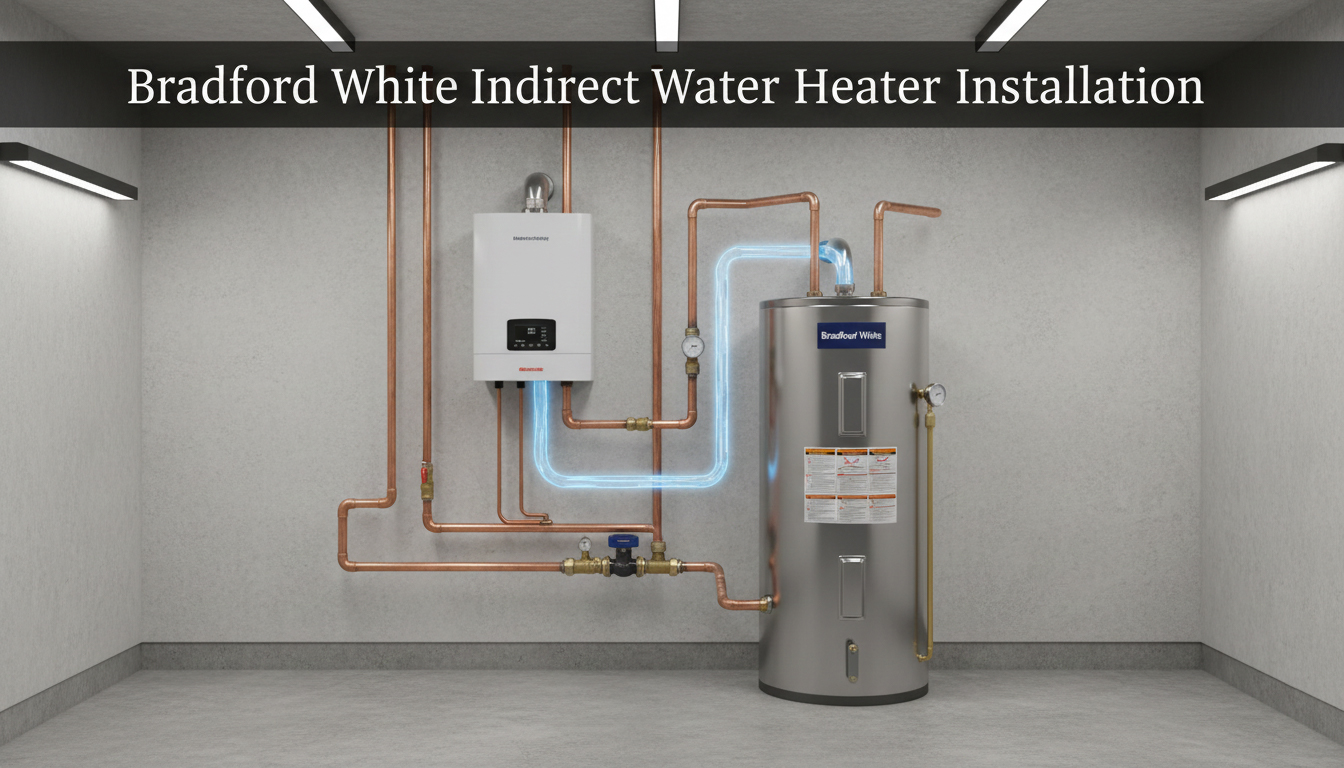
Ever find yourself in the middle of a shower, only for the hot water to suddenly give up on you? Or perhaps you’re tired of those sky-high energy bills just to keep a consistent supply of warm water for your home? You’re not alone! Many homeowners grapple with these frustrations, often thinking there’s no better way. But what if I told you there’s a reliable, energy-efficient solution that integrates seamlessly with your existing heating system?
You guessed it – we’re talking about the.
Bradford White indirect water heater installation
Here at HVACRLY, we understand that upgrading your home’s infrastructure can seem daunting. That’s why we’re here to promise you clarity, practical advice, and expert insights.
In this comprehensive guide, we’ll walk you through everything you need to know, from understanding the benefits to the step-by-step process, ensuring you’re well-equipped whether you’re a DIY enthusiast or preparing to work with a professional. Get ready to unlock consistent, cost-effective hot water for your household!
Understanding Your Bradford White Indirect Water Heater: The Smart Choice for Hot Water
Before we dive into the nitty-gritty of the installation, let’s talk about why a Bradford White indirect water heater might just be the upgrade your home needs. Unlike traditional tank-style water heaters that use their own dedicated burner, an indirect water heater leverages your home’s existing boiler or furnace to heat its water. This ingenious design offers a host of benefits that make it a truly
sustainable Bradford White indirect water heater installation.
How Indirect Water Heaters Work Their Magic
Think of it this way: your boiler is already working hard to heat your home. An indirect water heater simply taps into that existing heat source. Cold water enters the indirect tank, where it circulates around a coil or heat exchanger. Hot water or steam from your boiler flows through this coil, transferring its heat to the domestic water without ever mixing.
Key Benefits of a Bradford White Indirect Water Heater Installation
Choosing an indirect water heater, especially a reputable brand like Bradford White, brings significant advantages:
- Superior Energy Efficiency: Because it uses your already-running boiler, it often operates more efficiently than a separate water heater. Your boiler is typically more efficient at heating water than a standalone tank. This translates to lower energy bills and an eco-friendly Bradford White indirect water heater installation.
- Abundant Hot Water: Indirect heaters recover quickly. They can typically heat a large volume of water in a short amount of time, meaning fewer cold showers even with high demand.
- Longer Lifespan: Without direct flame impingement, the tank and components often last longer than conventional water heaters.
- Reduced Standby Heat Loss: Many models are incredibly well-insulated, minimizing heat loss and keeping your water hot for longer without constant reheating.
- Quiet Operation: Since there’s no separate burner firing up, indirect heaters operate very quietly.
These benefits highlight why investing in a
Bradford White indirect water heater installation
is often a smart, long-term decision for comfort and savings.
Is a Bradford White Indirect Water Heater Right for You?
Deciding on the right water heater for your home involves a few considerations. While indirect systems offer many advantages, they aren’t for everyone. Here are some factors to weigh, along with essential
Bradford White indirect water heater installation tips.
Evaluating Your Home’s Current Setup
The primary requirement for an indirect water heater is having an existing boiler or furnace that can provide the necessary heat.
- Boiler System: If you have a hydronic heating system (boiler with radiators or radiant floor heating), an indirect water heater is usually a perfect match.
- Forced-Air Furnace: Some indirect systems can integrate with forced-air furnaces, but it’s less common and might require a specialized coil or a plate heat exchanger to transfer heat from the furnace’s hot air to the water heater’s circulating loop. This usually means a more complex setup.
If you don’t have a boiler, or your furnace isn’t compatible, an indirect system might not be the most practical or cost-effective choice.
Sizing Your Indirect Water Heater
Sizing is crucial to ensure you have enough hot water without wasting energy. Don’t just match the size of your old tank! Indirect heaters recover much faster. Consider:
- Number of Occupants: More people generally mean more hot water demand.
- Peak Usage: Do you often run multiple showers or appliances simultaneously?
- Boiler Output (BTUs): Your boiler needs sufficient capacity to heat both your home and your water heater efficiently. A professional can help you calculate this.
A common mistake is oversizing or undersizing. When in doubt, consult a qualified HVAC professional.
Preparing for Your Bradford White Indirect Water Heater Installation
Proper preparation is the cornerstone of any successful installation. This section covers critical steps to take before you even unbox your new unit, ensuring a smooth and safe
how to Bradford White indirect water heater installation
process.
Safety First: Essential Precautions
Safety is paramount. Working with water, gas, and electricity can be dangerous if not handled correctly.
- Turn Off Power: Locate the circuit breaker for your boiler/furnace and the old water heater (if electric) and switch them off.
- Shut Off Gas (if applicable): If your boiler is gas-fired, turn off the gas supply at the main shut-off valve to the appliance.
- Shut Off Water: Turn off the main water supply to your house or at least the cold water inlet valve to your existing water heater.
- Ventilation: Ensure adequate ventilation, especially if you’re working with gas lines or soldering.
- Personal Protective Equipment (PPE): Wear safety glasses, gloves, and appropriate work attire.
Tools and Materials You’ll Need
Having the right tools on hand will save you time and frustration. Here’s a general list for
Bradford White indirect water heater installation best practices:
- Pipe wrenches, adjustable wrenches
- Pliers, screwdrivers
- Tubing cutter or hacksaw
- Copper pipe and fittings (or PEX, depending on local codes and preference)
- Soldering torch, solder, flux (for copper) or PEX crimping tool and fittings
- Thread sealant (Teflon tape or pipe dope)
- Pressure relief valve (T&P valve)
- Expansion tank
- Shut-off valves
- Drain pan (if required by code)
- Bucket and wet/dry vac for draining
- Level
- Measuring tape
- Electrical tester (multimeter)
Site Assessment and Old Unit Removal
Take a moment to assess the installation area. Is there enough space? Is the floor level and capable of supporting the new tank’s weight when full?
Draining and Disconnecting the Old Water Heater
- Attach a Hose: Connect a garden hose to the drain valve at the bottom of the old water heater.
- Open Hot Water Faucet: Open a hot water faucet somewhere in your house to break the vacuum and allow air in, speeding up drainage.
- Open Drain Valve: Open the drain valve on the water heater. Allow all water to drain out. This can take a while.
- Disconnect Connections: Once drained, disconnect the hot and cold water lines, any gas lines (if applicable), and electrical wiring.
- Remove Old Unit: Carefully move the old water heater out of the way. They can be heavy even when empty, so get help if needed.
The Step-by-Step Bradford White Indirect Water Heater Installation Guide
Now for the main event! This section will walk you through the core steps of a
Bradford White indirect water heater installation guide
. Remember, local codes vary, and if you’re unsure at any point, it’s always best to call a licensed professional.
Step 1: Positioning the New Tank
Carefully move your new Bradford White indirect water heater into its designated spot. Ensure it’s level and stable. If required by local code, place it in a drain pan.
Step 2: Connecting the Water Lines
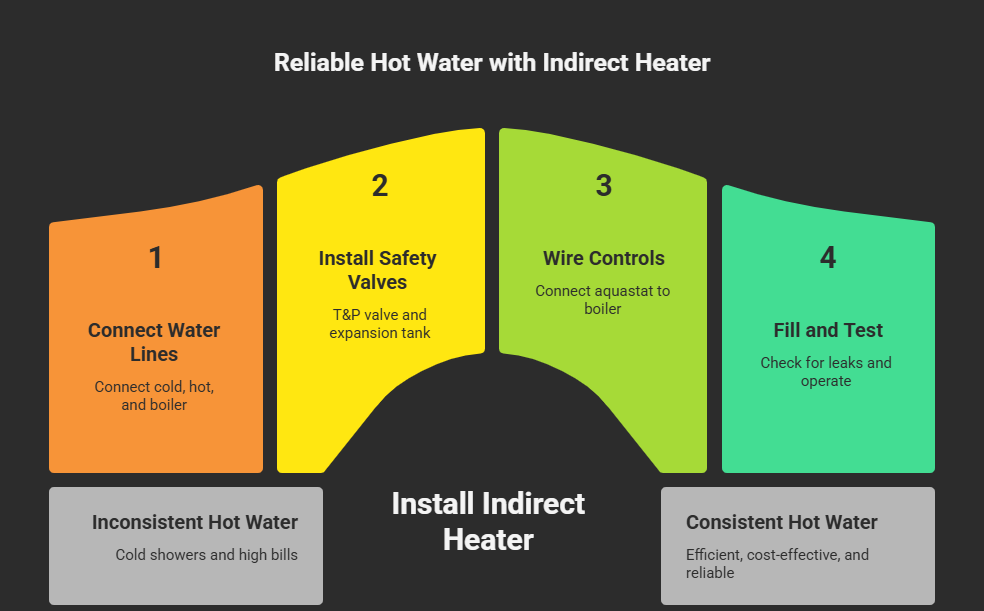
This involves connecting the cold water inlet, hot water outlet, and the boiler’s heating loop connections.
Cold Water Inlet
Connect the cold water supply line to the designated inlet on the indirect water heater. Install a shut-off valve on this line for future servicing. Use appropriate fittings and thread sealant to ensure leak-free connections.
Hot Water Outlet
Connect the hot water outlet from the indirect tank to your home’s hot water distribution system. Again, use proper fittings and sealant.
Boiler Loop Connections
This is where the “indirect” magic happens. You’ll connect two lines from your boiler system to the indirect tank’s heat exchanger ports:
- Boiler Supply (Hot): This line carries hot water from your boiler to the indirect tank’s coil.
- Boiler Return (Cool): This line carries the now-cooler water from the indirect tank’s coil back to your boiler to be reheated.
Ensure these lines are properly sized and insulated to minimize heat loss. Installing isolation valves on these lines is also good practice for maintenance.
Step 3: Installing the Temperature and Pressure (T&P) Relief Valve
Every water heater must have a T&P relief valve for safety. Install this valve into the designated port on the top or side of the tank. Run a discharge pipe from the T&P valve, sloping downwards, to an open drain or other approved discharge point, as per local codes. This pipe must not be capped or have any valves on it.
Step 4: Installing the Expansion Tank
An expansion tank is crucial for closed water heating systems. It absorbs the thermal expansion of water as it heats up, preventing excessive pressure buildup in your plumbing system and protecting your water heater and other appliances. Install it on the cold water inlet line, between the main shut-off valve and the water heater.
Step 5: Wiring the Controls (Aquastat/Thermostat)
This step involves connecting the indirect water heater’s aquastat (temperature control) to your boiler’s control system. The aquastat tells the boiler when the water in the indirect tank needs heating. This typically involves low-voltage wiring. If you are not comfortable or experienced with electrical wiring, this is a critical point to call a licensed electrician or HVAC technician. Incorrect wiring can damage your boiler, the water heater, or pose a serious safety risk.
Step 6: Filling the Tank and Checking for Leaks
- Close Drain Valve: Ensure the drain valve on the indirect water heater is fully closed.
- Open Hot Water Faucet: Open a hot water faucet in your home (e.g., bathroom sink) to allow air to escape.
- Open Cold Water Inlet: Slowly open the cold water inlet valve to the indirect water heater.
- Fill Tank: Allow the tank to fill completely. You’ll hear the air escaping from the open faucet. Once water flows steadily from the faucet, the tank is full. Close the faucet.
- Inspect for Leaks: Carefully inspect all connections you made for any signs of leaks. Tighten connections as needed.
Step 7: Activating the System and Testing
- Restore Power/Gas: Turn the power back on to your boiler/furnace and open any gas valves you closed.
- Set Aquastat: Set the indirect water heater’s aquastat to your desired hot water temperature (typically 120°F for safety and efficiency).
- Monitor Operation: Your boiler should now fire up and begin heating the water in the indirect tank. Listen for any unusual noises.
- Check Hot Water: After some time (depending on tank size and boiler output), test a hot water faucet to ensure you have hot water.
- Final Leak Check: Re-check all connections once the system is under pressure and hot.
Common Challenges and Troubleshooting During Bradford White Indirect Water Heater Installation
Even with the best planning, installations can present a few hurdles. Knowing what to look for can save you time and frustration, especially when addressing
common problems with Bradford White indirect water heater installation.
No Hot Water or Insufficient Hot Water
- Air Lock: Ensure all air has been purged from the system after filling. Re-open hot water faucets until water flows smoothly.
- Incorrect Wiring: Double-check the aquastat wiring to your boiler. A faulty connection will prevent the boiler from knowing when to heat the water.
- Aquastat Setting: Is the temperature set too low? Or is the aquastat itself faulty?
- Boiler Issues: Is your boiler firing correctly? Check its pressure and temperature gauges.
- Undersized Unit: If you consistently run out of hot water, the unit might be too small for your household’s demand.
Leaks at Connections
This is the most common issue. Go back and re-tighten any leaking fittings. For threaded connections, ensure you used enough Teflon tape or pipe dope. For soldered copper, the joint might need to be re-soldered if it wasn’t heated properly or enough solder wasn’t applied.
Pressure Relief Valve Discharge
If your T&P valve is regularly discharging, it indicates excessive pressure in the tank. This is usually due to one of two things:
- No Expansion Tank: Or an undersized/faulty expansion tank. Ensure it’s correctly installed and properly charged.
- High Water Pressure: Your home’s incoming water pressure might be too high. A pressure reducing valve (PRV) on your main water line can help.
Never plug or cap a T&P discharge pipe. This is extremely dangerous.
Boiler Short Cycling
If your boiler is turning on and off too frequently when heating the indirect tank, it could be a sign of improper sizing or control settings. Consult your boiler’s manual or an HVAC professional.
Post-Installation Care and Maintenance
Once your new Bradford White indirect water heater is up and running, a little ongoing care will ensure its longevity and continued efficiency. This
Bradford White indirect water heater installation care guide
will help you keep things smooth.
Annual Maintenance Checklist
- Inspect the T&P Valve: Annually, carefully test the T&P relief valve by lifting the lever for a few seconds to ensure it’s not seized. Water should flow out and stop when the lever is released. If it doesn’t, it needs replacement.
- Check for Leaks: Periodically inspect all connections, pipes, and the tank itself for any signs of corrosion or leaks.
- Inspect Expansion Tank: Ensure the expansion tank is not waterlogged. You can tap it; a full tank will sound dull, an empty one hollow.
- Flush the Tank (Optional but Recommended): While indirect heaters are less prone to sediment buildup than direct-fired tanks, flushing annually can still help remove any accumulated sediment. This involves connecting a hose to the drain valve and letting it run until the water runs clear.
- Insulate Pipes: Ensure hot water pipes leading from the tank are insulated to reduce heat loss.
When to Call a Professional
While many maintenance tasks are DIY-friendly, some issues require expert intervention. Always call a licensed HVAC or plumbing professional if you encounter:
- Persistent leaks you can’t resolve.
- Consistent lack of hot water despite troubleshooting.
- Strange noises coming from the tank or boiler.
- Any issues with the boiler’s operation.
- Gas leaks (if your boiler is gas-fired).
- Electrical problems.
Don’t hesitate to seek professional help. It’s an investment in your safety and the longevity of your system.
Frequently Asked Questions About Bradford White Indirect Water Heater Installation
Does a Bradford White indirect water heater need electricity?
Yes, while it doesn’t have its own burner, it typically requires electricity for its aquastat (temperature control) and to power the boiler’s circulator pump that moves water through its coil. This is usually low-voltage wiring.
How long does it take to install an indirect water heater?
For an experienced professional, a standard replacement can take 4-8 hours. A new installation from scratch, or one requiring significant plumbing or electrical modifications, could take a full day or more. For a DIYer, plan for several days, allowing for unforeseen challenges and thorough checks.
Can I install a Bradford White indirect water heater myself?
If you are highly skilled in plumbing and basic electrical work, understand hydronic heating systems, and are comfortable working with gas (if applicable), then theoretically yes. However, it is a complex job with significant safety implications. Many local codes require permits and professional installation for water heaters. For peace of mind and to ensure proper, safe, and efficient operation, hiring a licensed professional is strongly recommended.
What’s the typical lifespan of a Bradford White indirect water heater?
Bradford White indirect water heaters are known for their durability. With proper installation and regular maintenance, you can expect them to last 15-20 years, often longer than conventional tank-style water heaters, due to less direct wear and tear from a dedicated burner.
Do indirect water heaters save money?
Yes, in most cases, they do. Because they leverage your existing boiler (which is often more efficient at heating water than a standalone water heater) and have excellent insulation, they can significantly reduce your water heating costs compared to traditional electric or gas tank heaters. The initial investment might be higher, but the long-term savings on energy bills are substantial.
Ready for Reliable Hot Water?
Phew! We’ve covered a lot, from the incredible benefits to the detailed steps of a
Bradford White indirect water heater installation
It’s clear that choosing an indirect system is a fantastic way to ensure your home enjoys consistent, efficient hot water for years to come. Whether you’re a seasoned DIYer or looking to hire a pro, understanding these steps empowers you to make informed decisions and appreciate the work involved.
Remember, safety and adherence to local codes are non-negotiable. If any part of this process feels beyond your comfort zone, don’t hesitate to reach out to a qualified HVACR professional. They’ll ensure your system is installed correctly and safely, giving you peace of mind. Here’s to endless hot showers and lower energy bills! Stay safe and stay comfortable!

- Bradford White Hybrid Water Heater Troubleshooting – Your Complete Guide - December 27, 2025
- Bradford White Ultra High Efficiency Water Heater – Your Comprehensive Guide - December 27, 2025
- Bradford White Hybrid Water Heater Installation Instructions - December 27, 2025